






What is World Toilet Day?
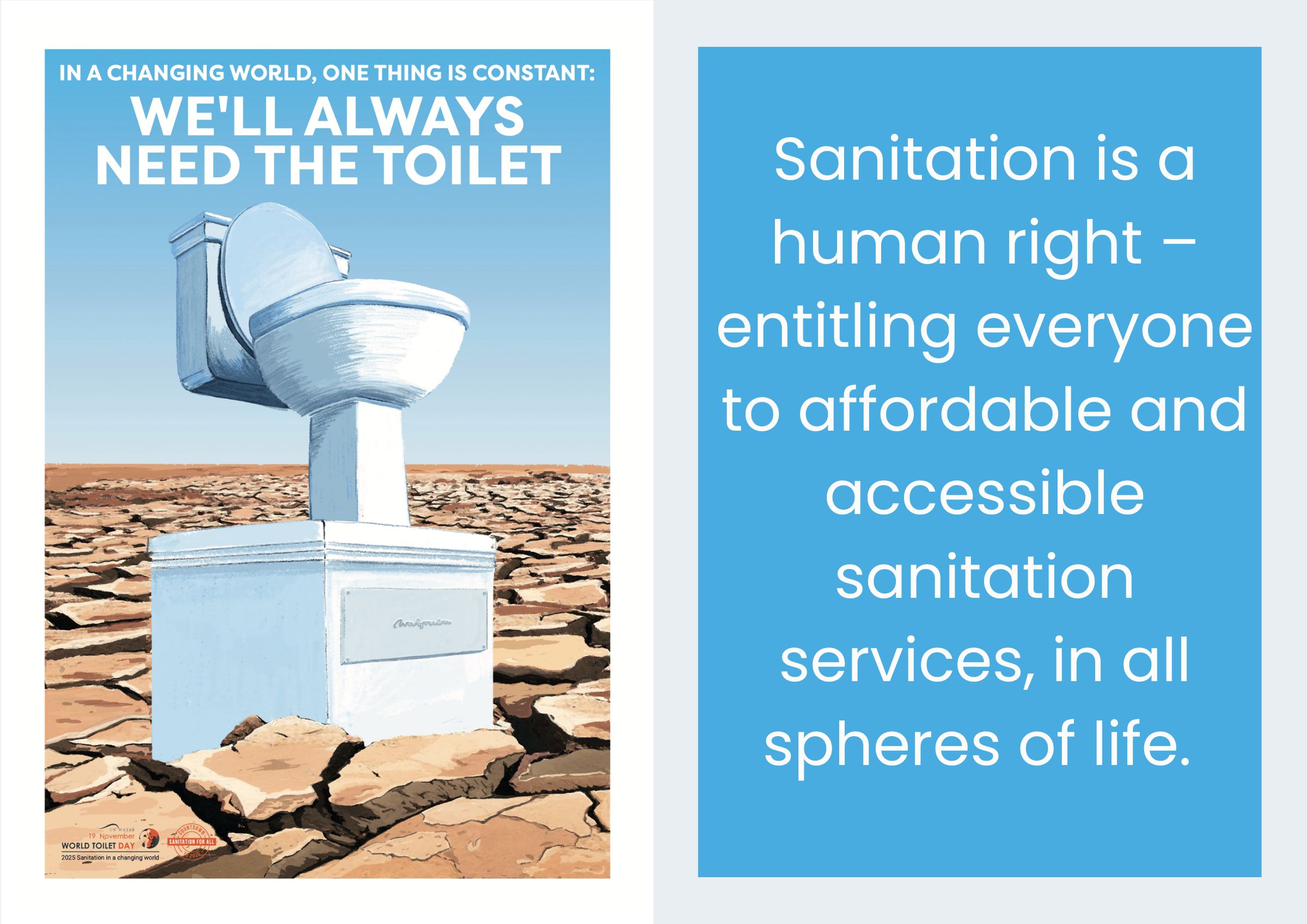
World Toilet Day is a campaign run by the United Nations every year, to highlight the need for sanitation worldwide. The event falls on the 19th November 2025 and highlights the need for future-ready toilets that are accessible, sustainable and protected by investment. After all, a toilet is a necessity, not a privilege.
The theme of this year’s World Toilet Day is embodied with a bold, unapologetic slogan: ‘We’ll always need the toilet’.
At Bladder & Bowel Community we have provided the Just Can’t Wait Card for Free for over 30 years, so we understand what it is to need the toilet! As the original and most recognised Toilet Card in the UK with around a quarter of a million in circulation, it has helped many people access a toilet in an emergency. But what about places where toilets aren’t available?
Bladder & Bowel Toilet Scheme
At Bladder & Bowel Community we have been running our own Toilet Scheme, where businesses can sign up to share their toilets with the public more openly. Over 250,000 people now carry the Just Can’t Wait toilet card and the numbers are rising. It’s more important than ever to get local shops and businesses on the board with the toilet scheme.
The toilet scheme is designed to:
- Help people with a bladder or bowel condition access more toilets
- Educate local businesses on people’s needs
- Better connect people with their local community and reduce loneliness
We urge any local businesses and retailers on the high street to get in touch with us if they need support, or would like to discuss getting involved.
Find out more, or order your FREE Toilet Scheme pack
Why do Toilets Matter?
In the UK the necessity for toilet access is one thing, but there are many countries in the world where sanitation is not available at all. Young girls fear abuse, having to use unsafe locations to urinate or empty their bowels. 3.4 billion people live without managed sanitation services – this is nearly half the world’s population. This isn’t a new problem, and the way we need toilets won’t change.
According to World Toilet Day campaign:
“Today, billions still live without a safe toilet, with the poorest, especially women and girls, most affected. Ageing infrastructure, climate change, and insufficient investment are increasing pressure on sanitation systems.”
-United Nations
Their 2018 Mother Nature Video still rings true with our Community, the need for a toilet is as important to us now as it ever was:
Sanitation is a Human Right
Toilets offer a fundamental level of sanitation that is essential to our existence. Even in the animal world, poo will be buried and done away from where the animals sleep or eat. So it is abhorrent to think that in many areas of the world people still lack basic sanitation facilities, leaving communities isolated and in danger of disease and worse.
Toilets offer Dignity through Privacy, Safety, Cleanliness, Respect and Independence.
- We’ll always need the toilet. No matter what lies ahead, we will always rely on sanitation to protect us from diseases and keep our environment clean.
- Toilets are under pressure. Rising demand, climate change, ageing infrastructure and low investment all threaten our human right to sanitation.
- We need toilets fit for the future. We must urgently invest in ‘future-ready’ sanitation – resilient to climate change and accessible to everyone, everywhere, always.
Find out more on the UN-Water website
Availability of Public Toilets
Since the turn of the Millennium people have been concerned about the reduction in the number of public toilets available in the UK, and for good reason. The decline in the use of the high street has been perhaps leaned on as an excuse – why cater for only a sliver of the population? But if high streets had better facilities, they may well be more frequented.
We conducted our own research into public toilet use, and discovered just how much it concerned people and affected their daily routine. Part of the work we did looked into Changing Places toilets, which has received around £30m funding in recent years.
In Coventry, one grass roots action group Connecting for Good, established that toilet signage was an issue – there were many toilets available to the public that just weren’t visible enough. They have since installed improved signage and are now working towards raising awareness for sanitary bins in male toilets, and accessibility for people with a disability.
What is a Changing Places Toilet?
A changing places toilet is a recognised facility which is accessible to people with a disability. It must consist of the following:
- Wheelchair accessible toilet, with handrails and space either side for access
- 12m square space, with privacy screens and non slip surface
- Washbasin at an accessible height
- Ceiling track hoist and changing table
Some changing places toilets will also have a shower installed for hygiene, and include accessories suitable for stoma patients.
What is a Stoma Friendly Toilet?
A stoma friendly toilet as described by Colosomy UK consists of:
- Hooks – to hand clothing or belongings, at least 1m from the floor
- Sanitary surface such as a shelf, or clean flat cistern lid, easily accessible
- Wall-mounted Mirror
- Sanitary bin
THE FACTS – Did you know?
- In London there are on average 22 public toilets per borough – with around 300,000 inhabitants in each borough, it’s clear to see this isn’t enough.
- The average person goes to the toilet around 6-7 times per day.
- In a study by East Devon, it was found that in 2019 each public toilet cubicle cost on average £15k to maintain each year, which included cleaning twice a day, providing toilet paper and maintenance.
- At the current rates of progress, 3 billion people around the world will still be living without safe toilets in 2030.
What are other people doing about it?
In Ireland, politicians are calling for toilet cards to be recognised by law in a bid to make sanitation more accessible for people who just can’t wait. On a local level there are some campaigns for better access to toilets:
Let us know if there is a scheme near you that you’d like to share.
Further Information
You can find out more about World Toilet Day here at the United Nations Website, and find out more about their work to reduce toilet poverty around the world.
The Changing Places website offers an interactive map to help you find accessible toilets.
If you would like to find out more about the Just Can’t Wait Card, our Toilet Scheme, or discuss getting more involved in our campaigns please get in touch.